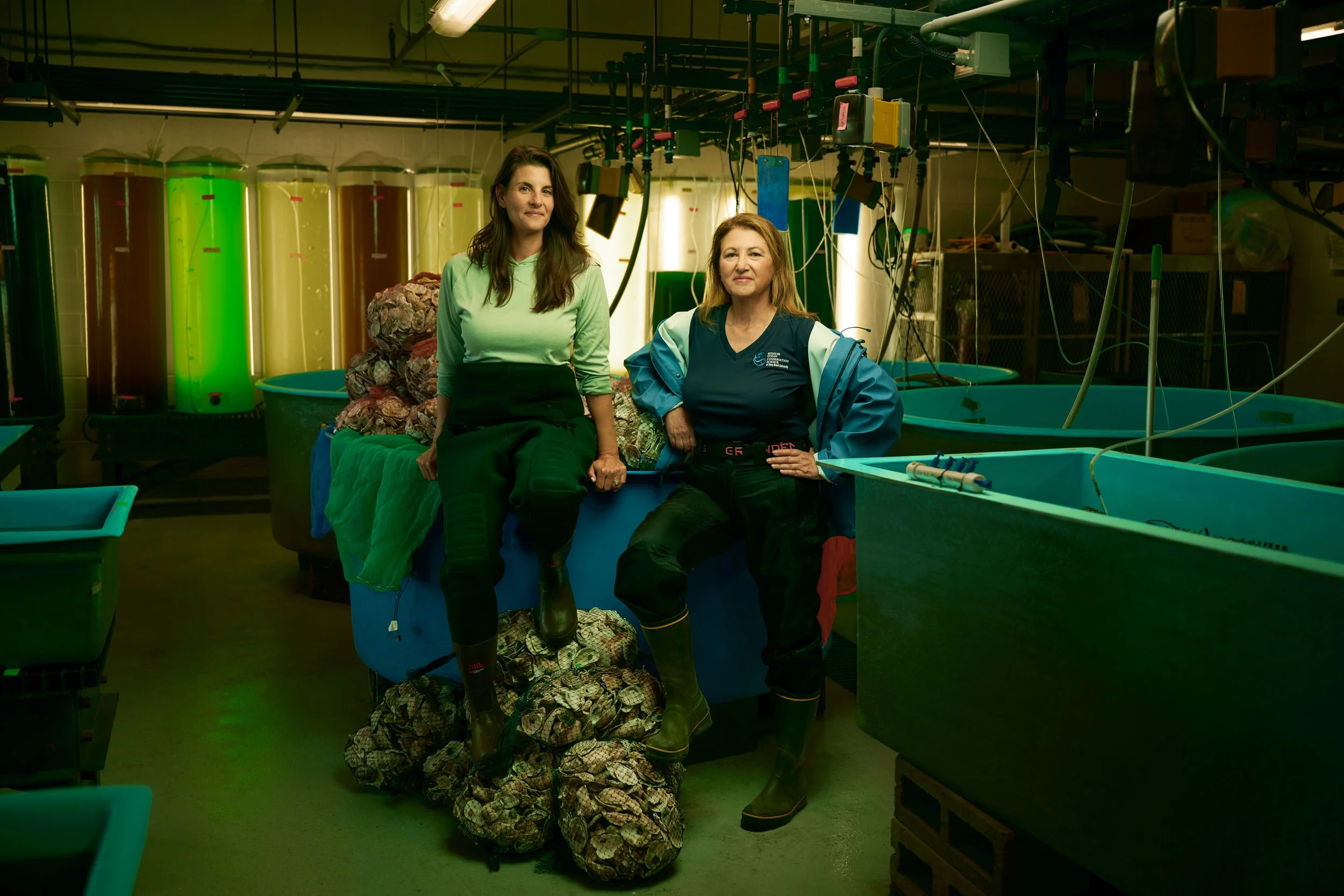
Highlighting the team behind the Shinnecock Bay Hope Spot - a marine project working to restore an entire marine ecosystem
Shinnecock Bay
In the summer of 2024 I photographed an expedition of marine biologists who are working to restore the Shinnecock Bay marine ecosystem on Long Island, in New York.
As a partnership with the Shinnecock Indian Nation, a team of marine biologists from Stony Brook University. Led by Dr.Ellen Pikitch and Christine Santora (pictured above), the project is supported by ‘Her Deepness’, Dr. Sylvia Earle, who came out for a special media event to unveil DataXplorer, a 12-foot, solar-powered unmanned vessel that glides silently across the water, collecting fragments of DNA left behind by marine life.
The Bay
Shinnecock Bay, near Southampton, is a long-standing haven for wildlife, from finback whales to roseate terns.
In 2022, Mission Blue designated the bay a global Hope Spot, recognizing both its ecological significance and potential for renewal.
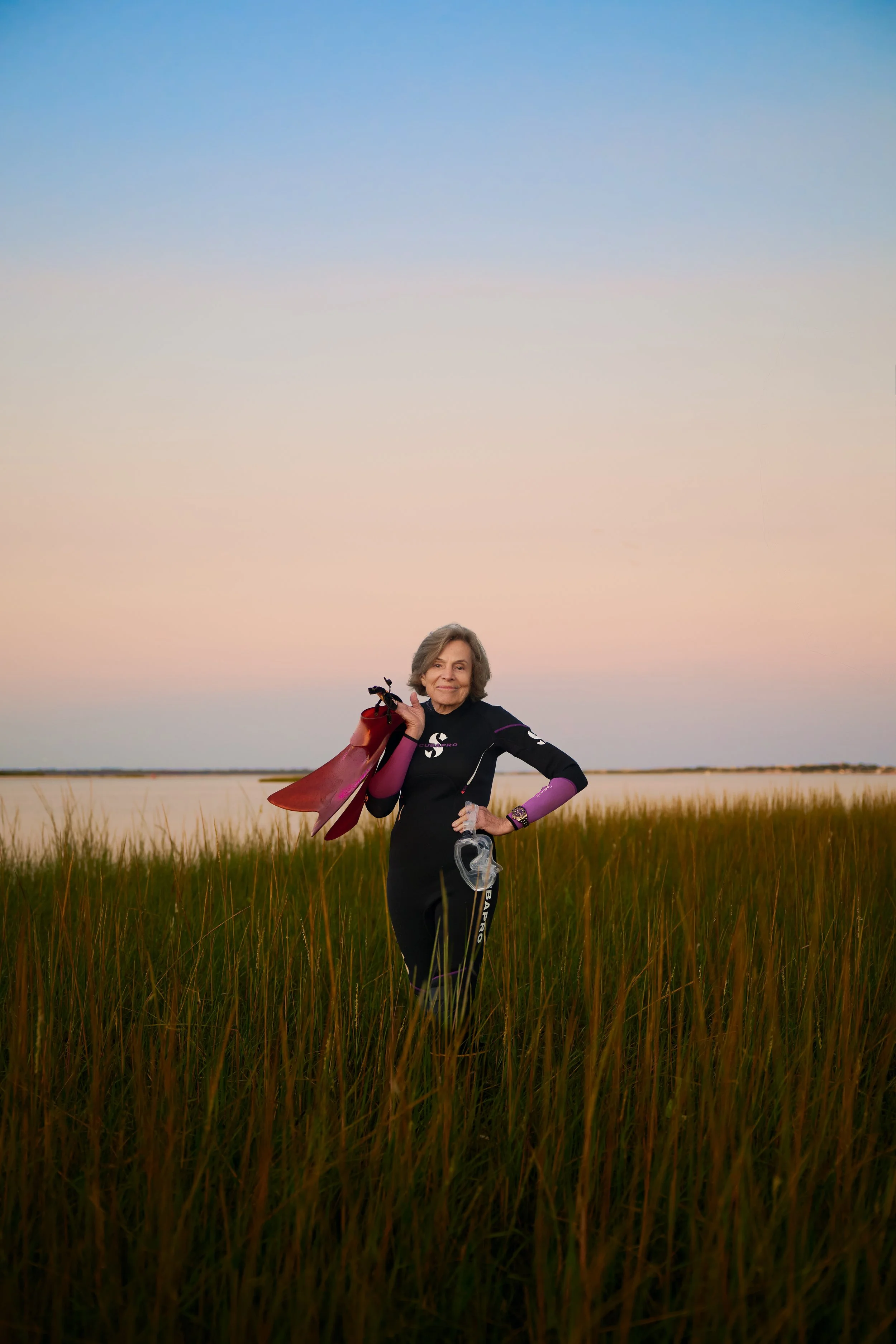
Marine biologist Dr. Sylvia Earle has supported the Hope Spot since its designation, first visiting in 2023 for the official ribbon cutting.
In 2024, she returned with Rolex’s Perpetual Planet Initiative to examine biodiversity in the bay, and later that year came back to launch the eDNA expedition and meet with Shinnecock Nation Elders to share knowledge and perspectives.
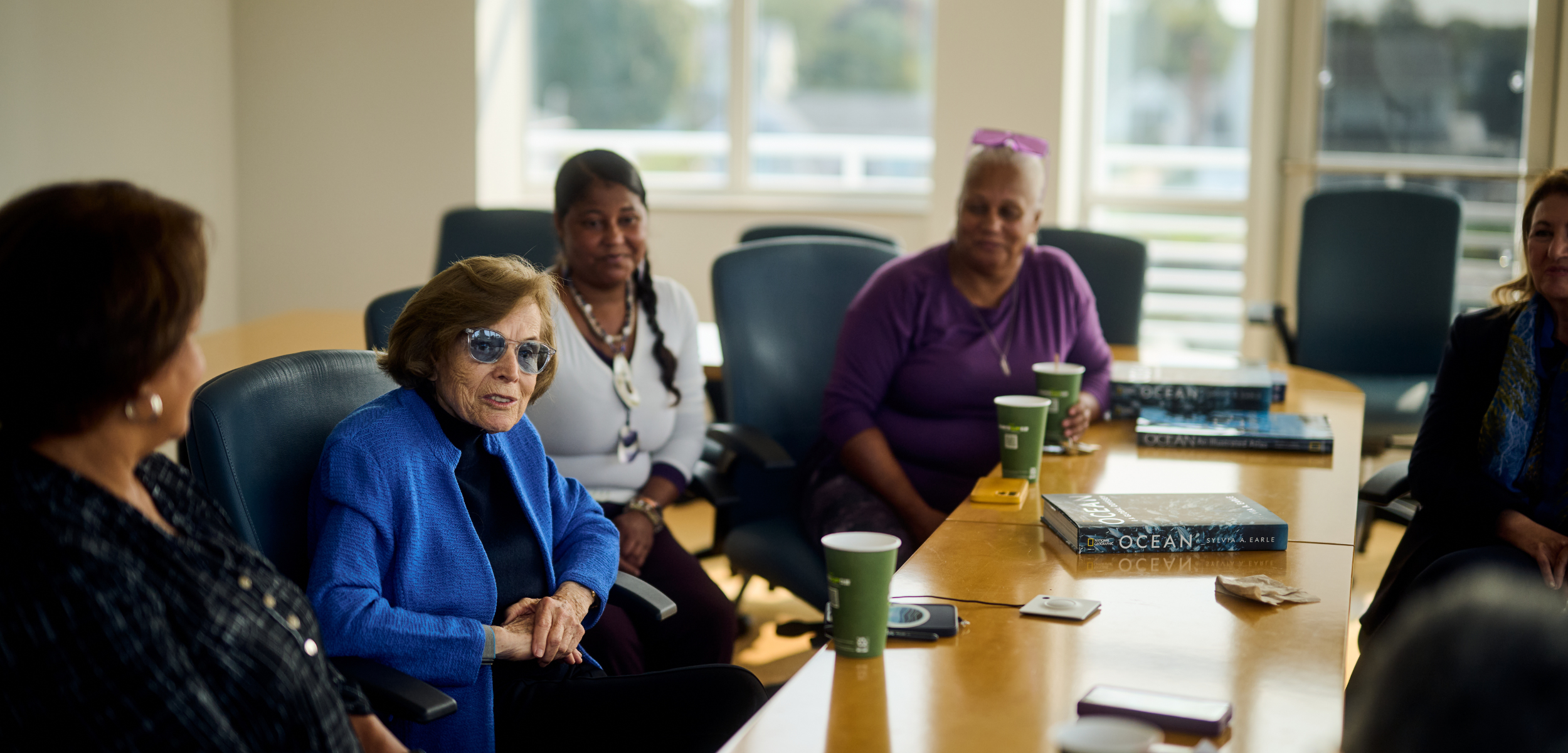
Meeting with a group of Shinnecock Nation Elders.
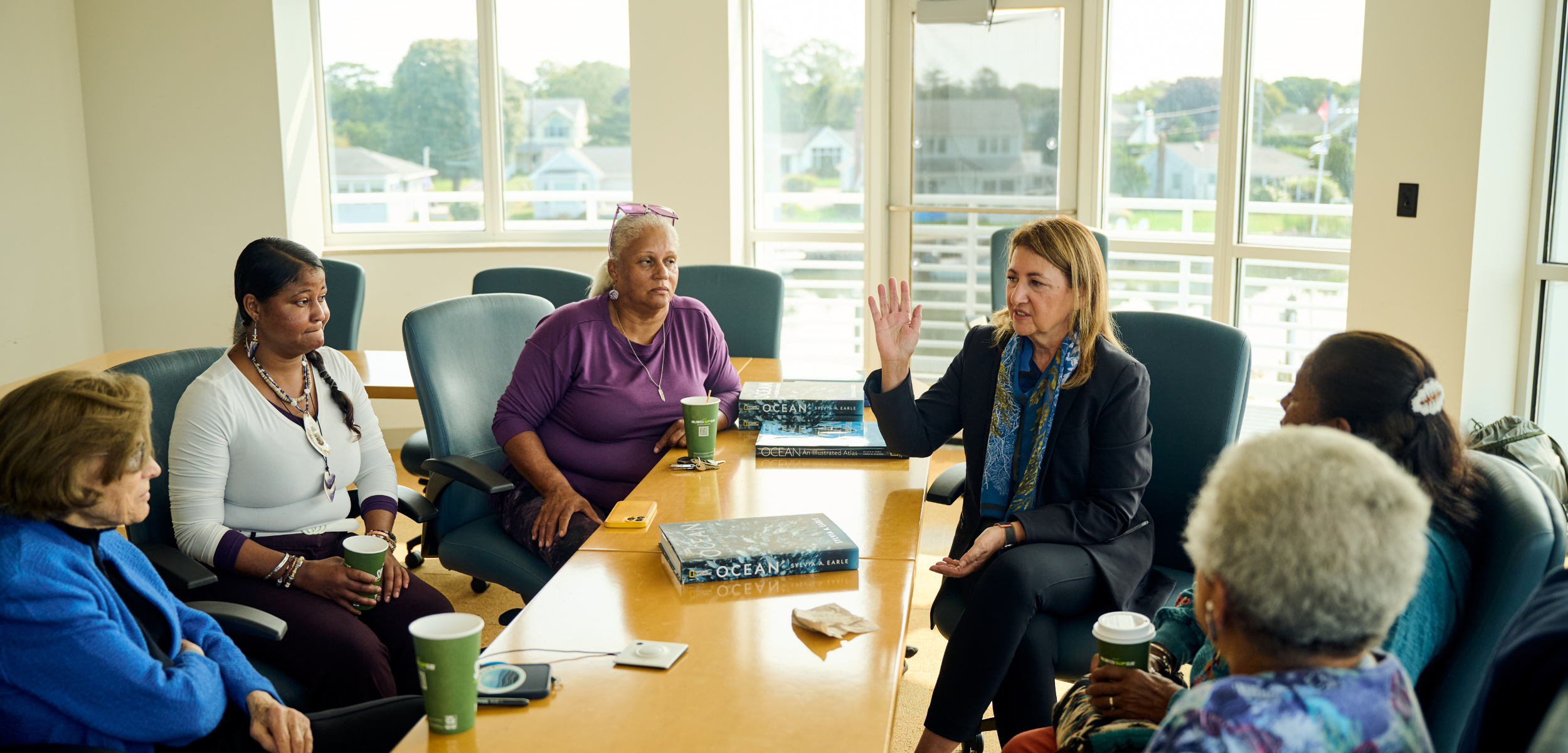
Meeting with a group of Shinnecock Nation Elders.
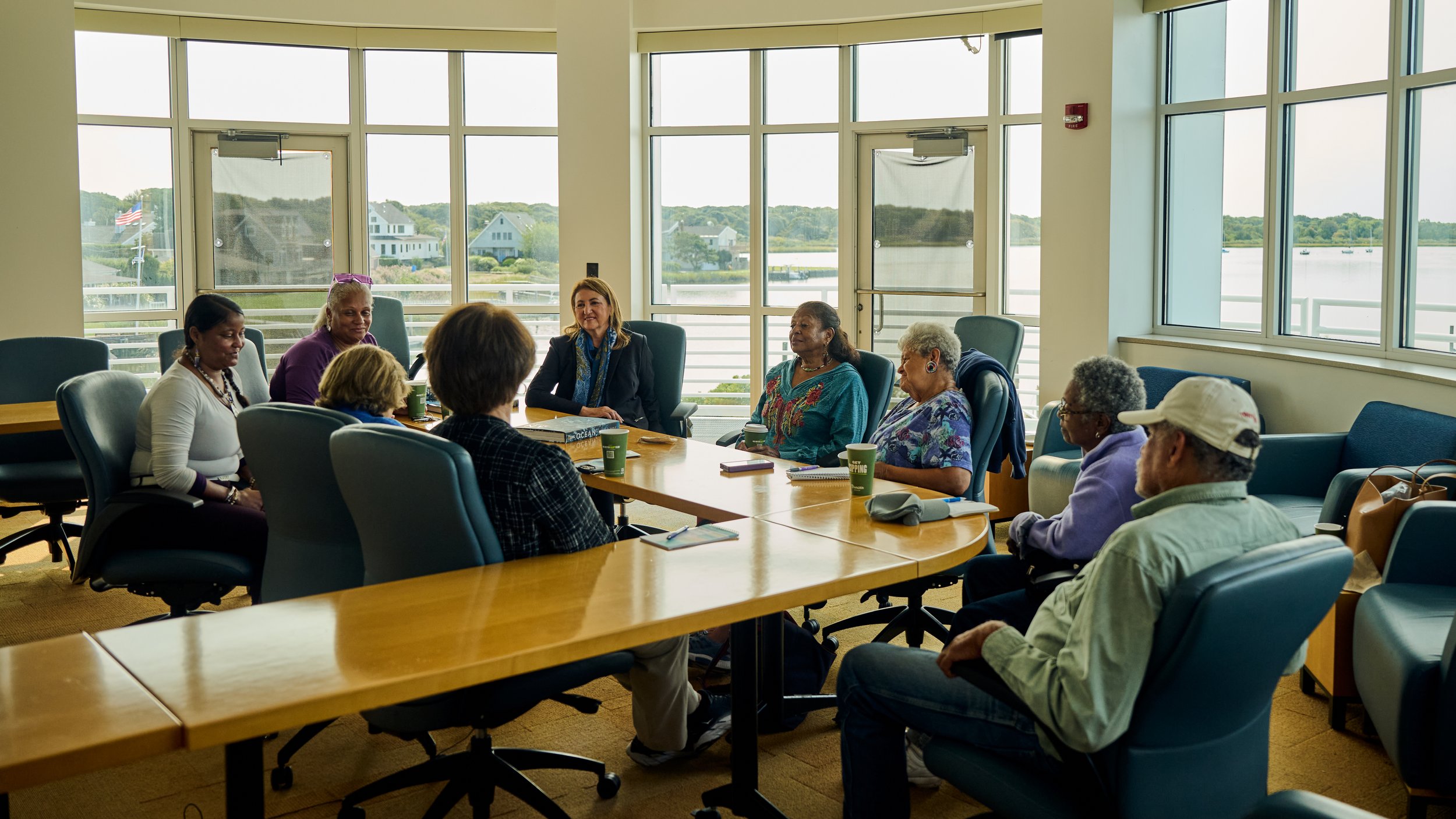
Meeting with a group of Shinnecock Nation Elders.
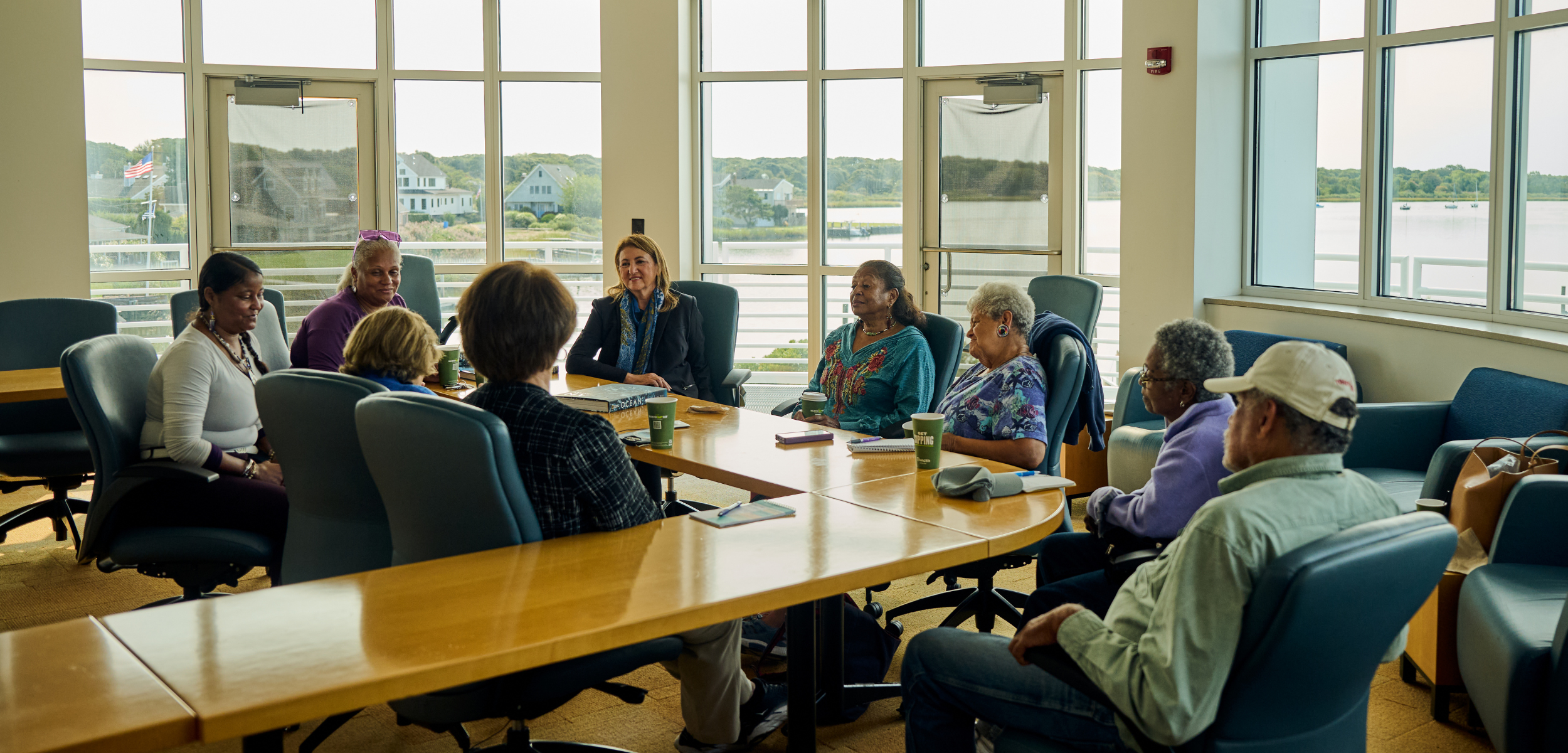
Meeting with a group of Shinnecock Nation Elders.
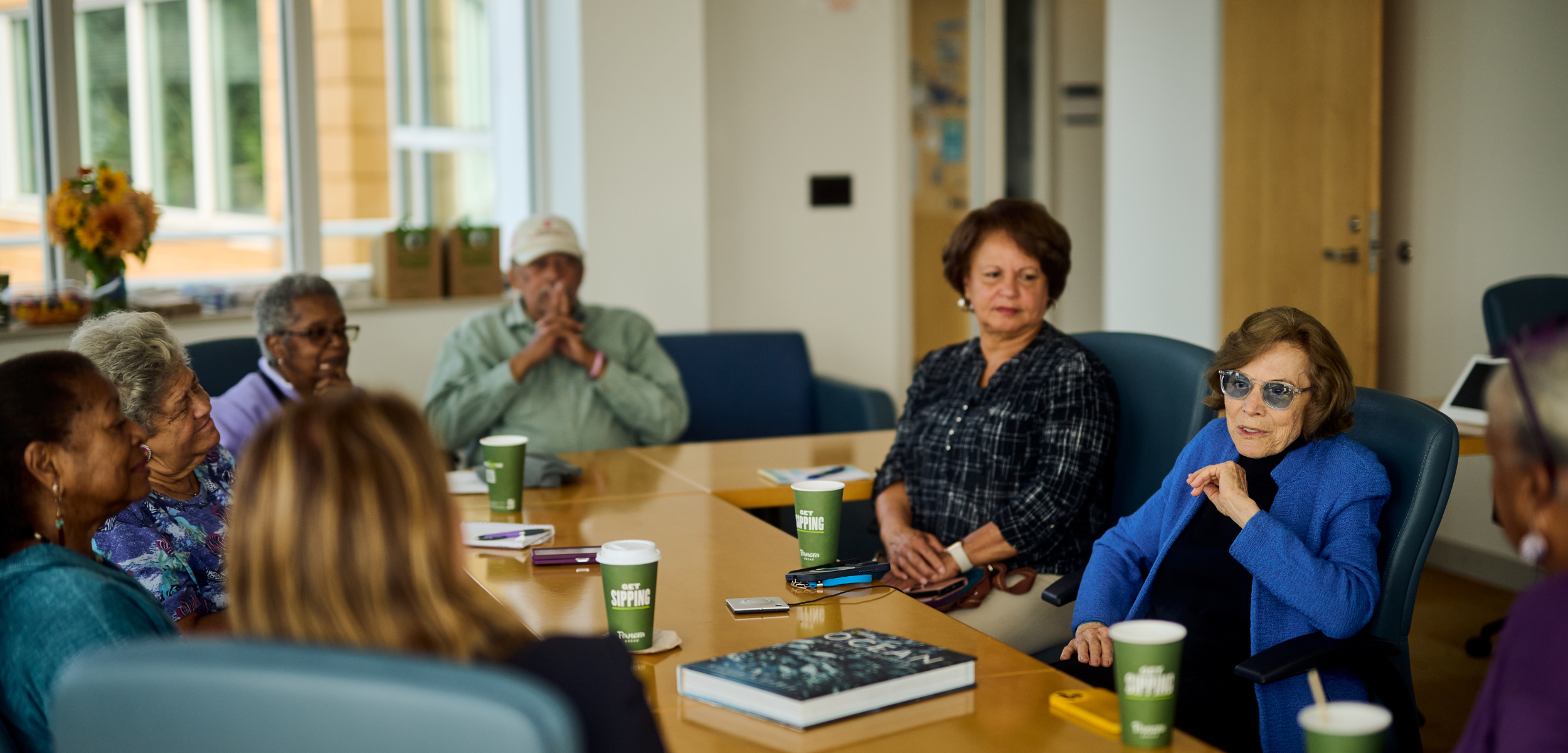
Meeting with a group of Shinnecock Nation Elders.
The Nation
The bay is the ancestral home and living relative of the Shinnecock Indian Nation. Their traditions of fishing and stewardship stretch back thousands of years. Today, they are key partners in the Hope Spot — bringing cultural knowledge and ensuring the work honors both ecology and heritage.
Dr. Kelsey Leonard (pictured further below) has taken a lead role in spearheading new research possibilities and initiating the very first Indigenous Advisory Council for a Hope Spot.
Sunshine Gumbs (pictured here), a member of the Shinnecock Nation and experienced artisan and project manager, is also an integral part of the Hope Spot team. Sunshine helps facilitate the work of the Council, was a member of the September 2024 expedition field team, and represented the Shinnecock Nation in accepting and returning the Explorers Club flag along with Dr. Pikitch.

The Vessel
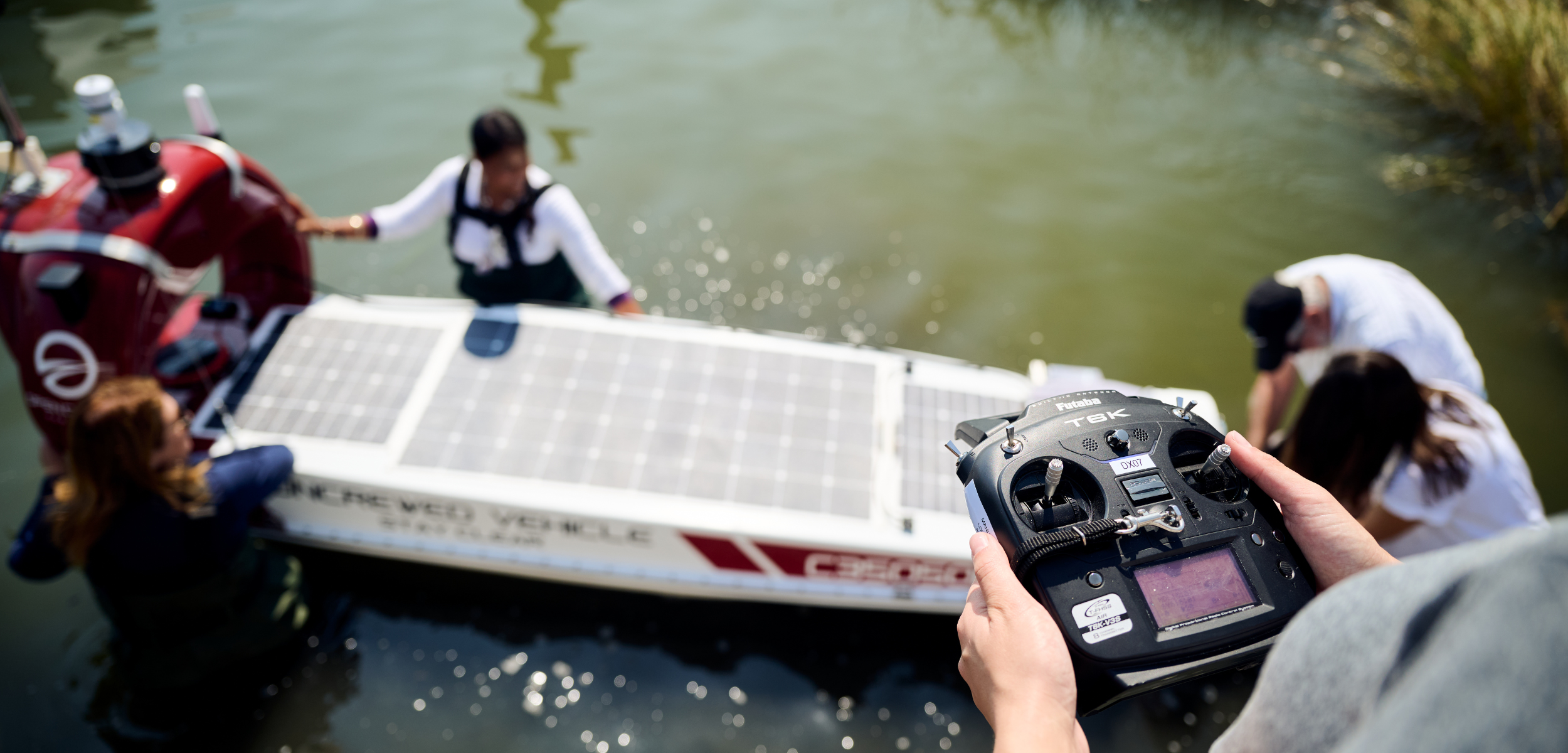
Researchers from Stony Brook University and their partners are working to research the bay’s marine life in inventive ways. Their latest tool, deployed during the expedition, is DataXplorer, a 12-foot Uncrewed Surface Vessel (USV) outfitted with an environmental DNA (eDNA) sampler.
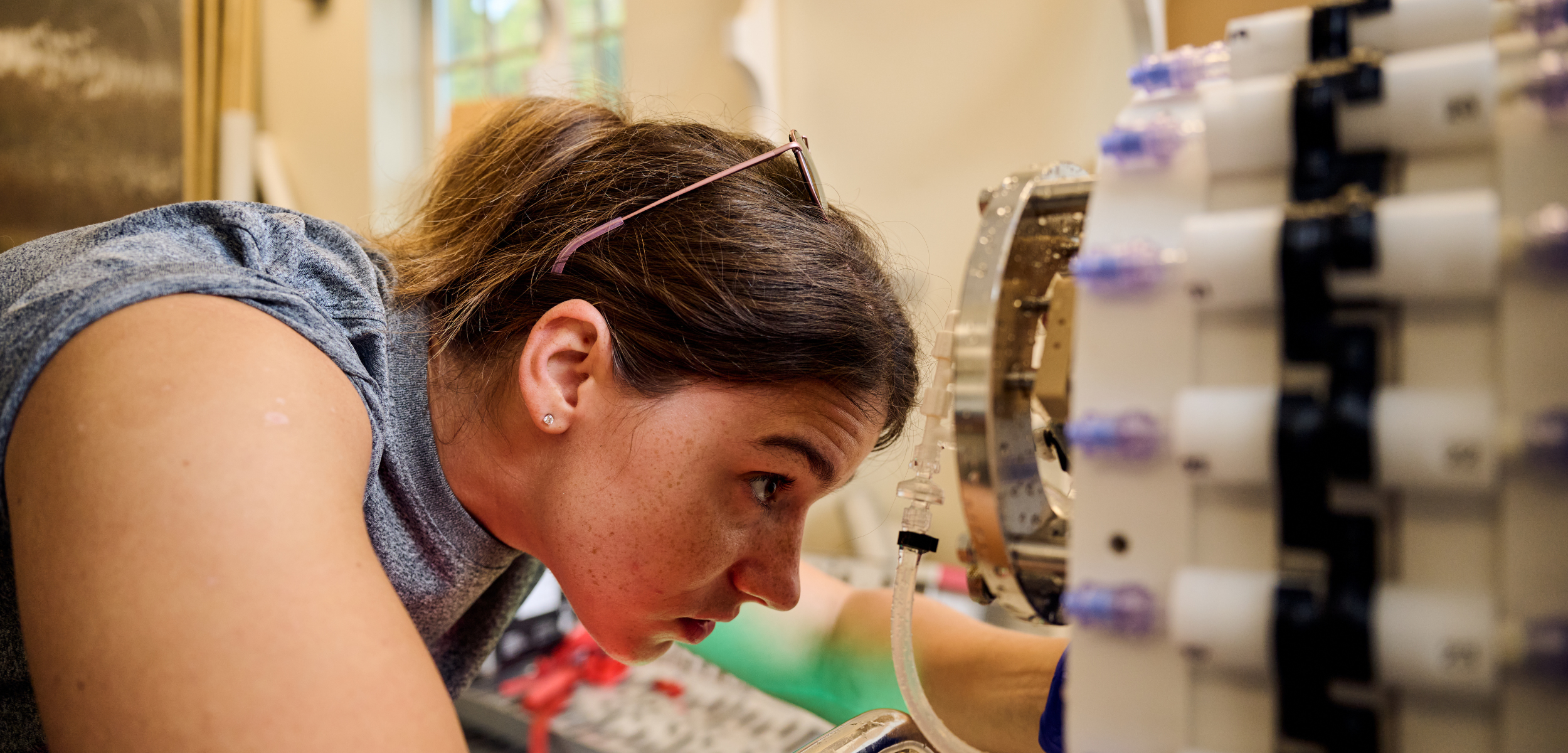
Instead of dragging nets along the seafloor to examine biodiversity– a destructive method that damages habitats – this method samples the water itself. The samples contain fragments of DNA left behind by marine life and capture a fuller picture of the bay’s creatures, from the tiniest invertebrates to larger fish that would otherwise be missed.
The expedition was the first time an uncrewed solar-powered USV was used with an eDNA sampler, representing a more environmentally friendly approach that aligns with local indigenous values.
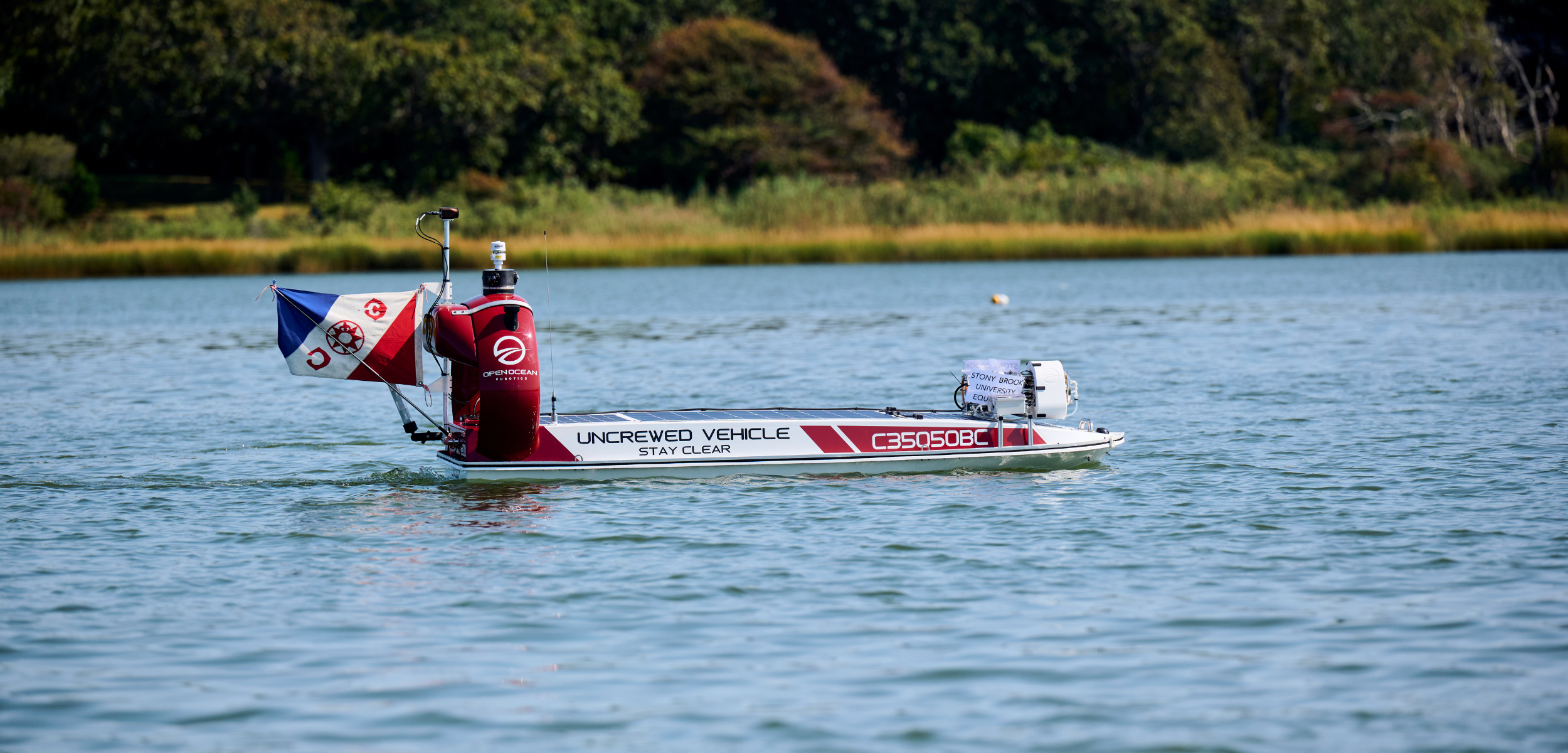
DataXplorer, a 12-foot Unscrewed Surface Vessel outfitted with an environmental DNA (eDNA) sampler. The flag denotes the Explorers Club expedition for this project.
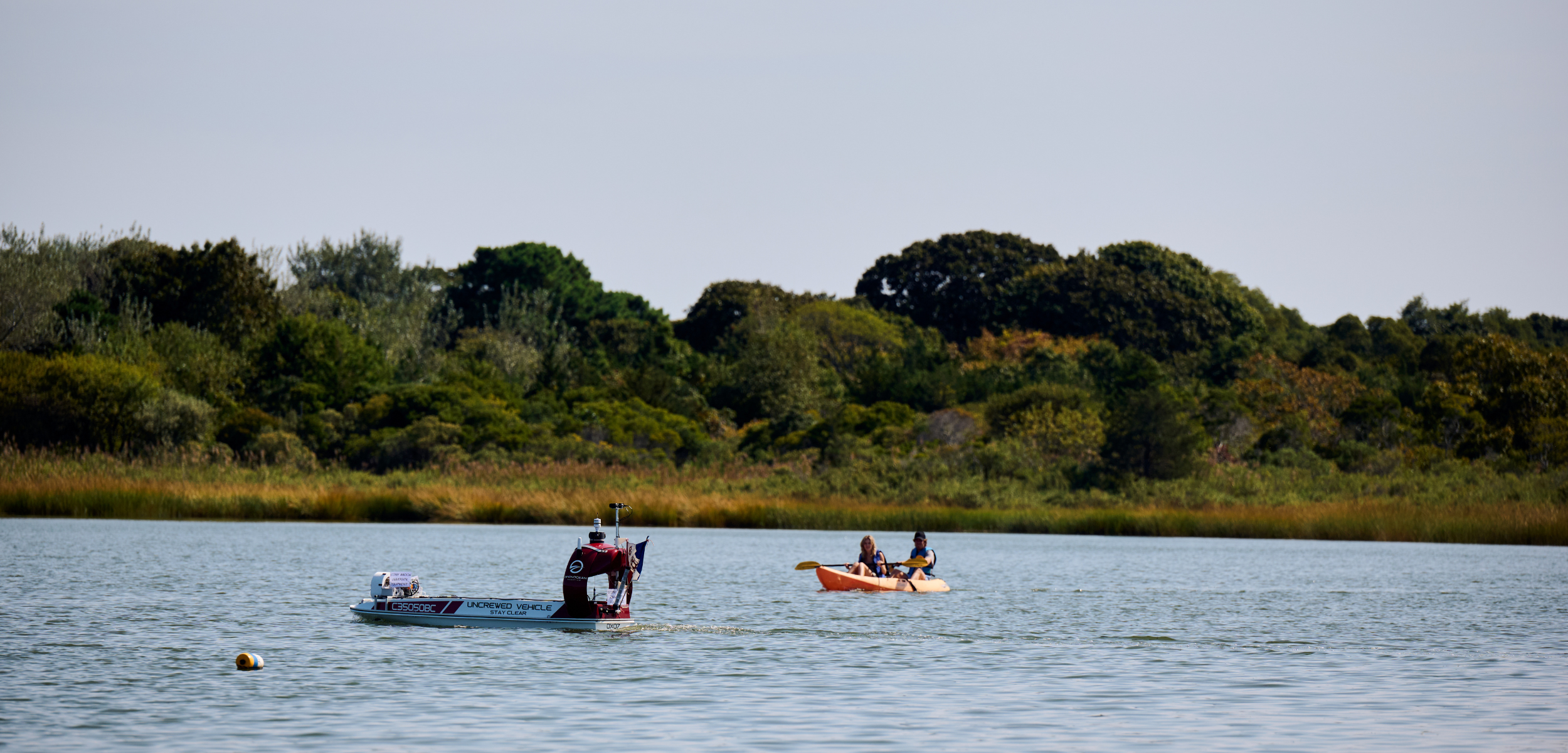
DataXplorer, a 12-foot Unscrewed Surface Vessel outfitted with an environmental DNA (eDNA) sampler. The flag denotes the Explorers Club expedition for this project.
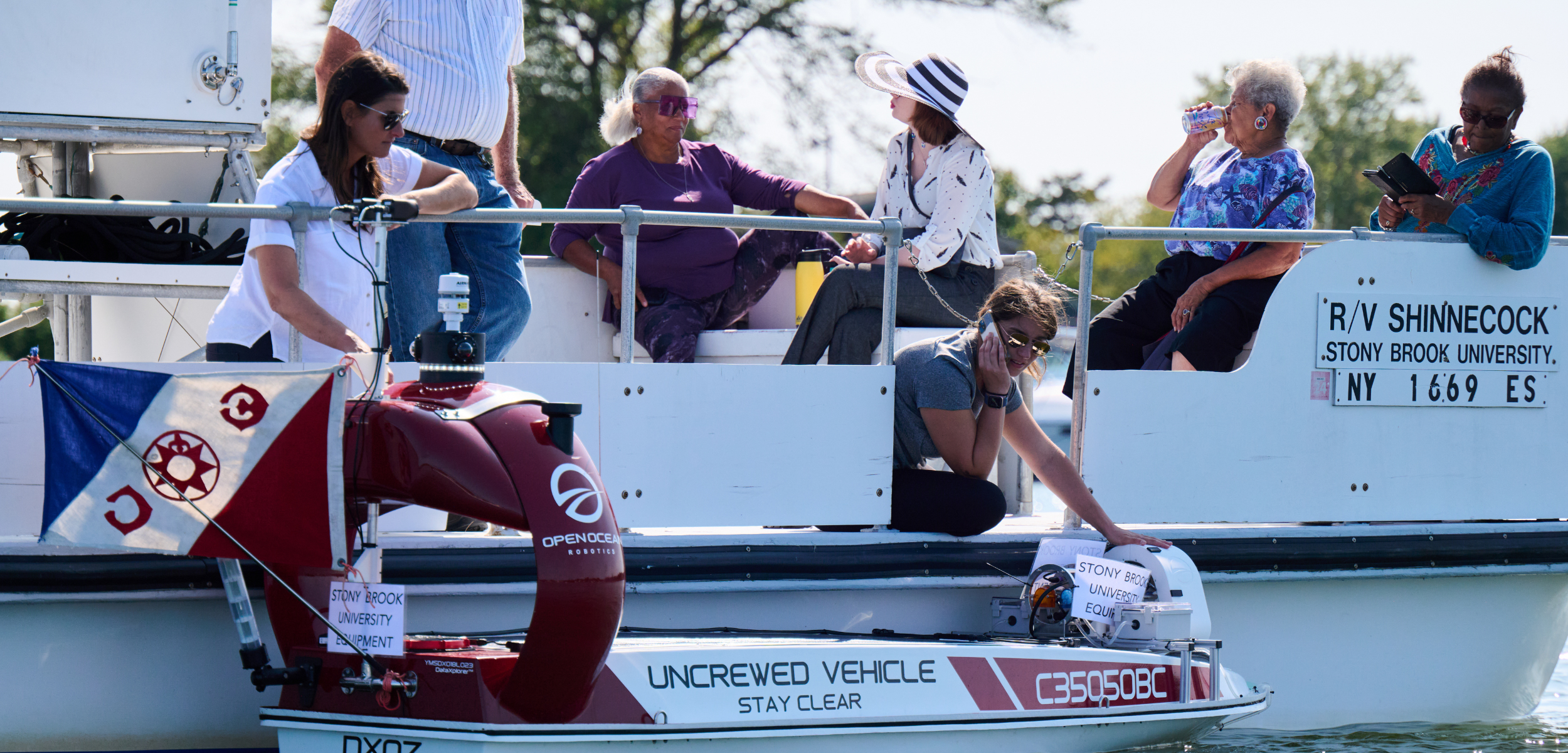
DataXplorer, a 12-foot Unscrewed Surface Vessel outfitted with an environmental DNA (eDNA) sampler. The flag denotes the Explorers Club expedition for this project.
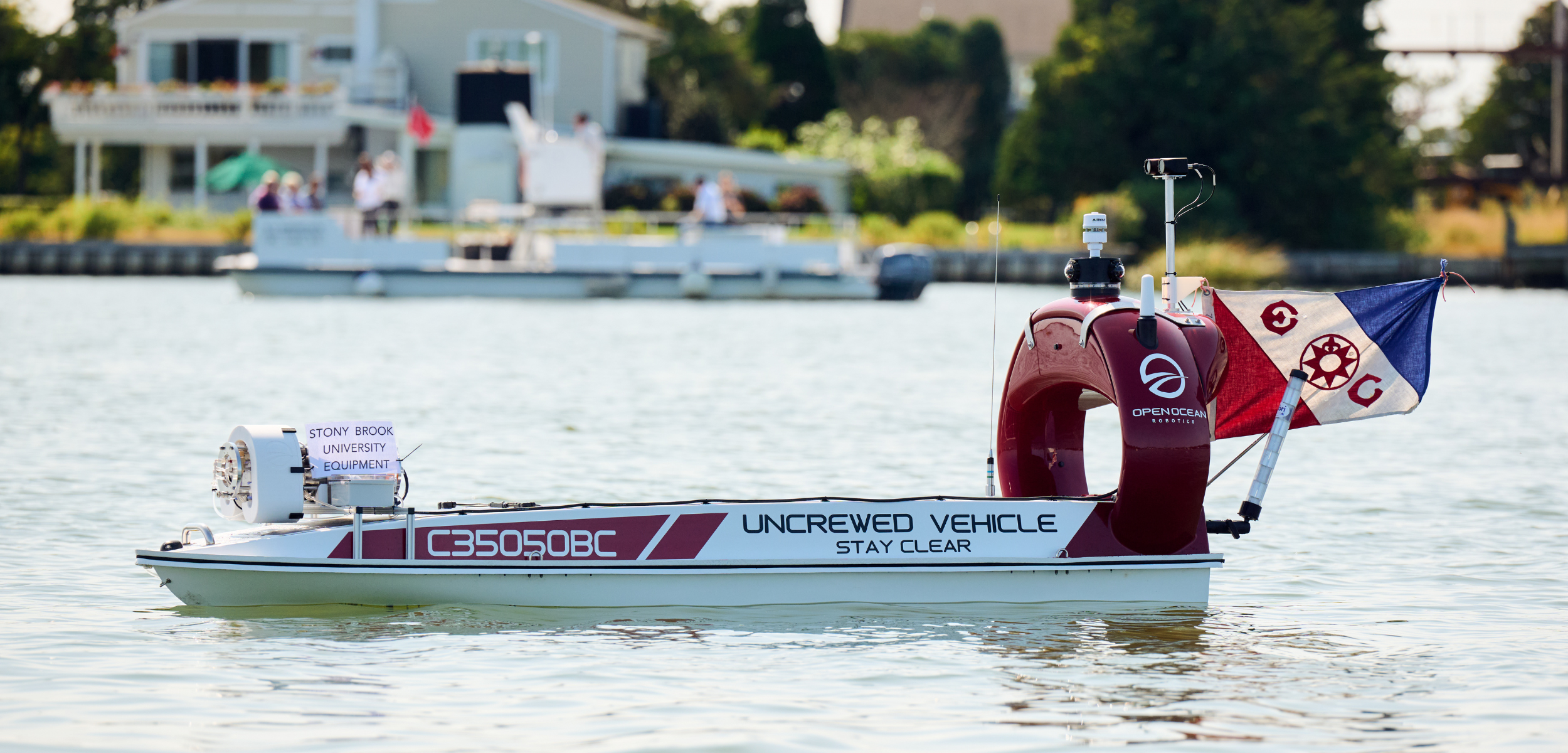
DataXplorer, a 12-foot Unscrewed Surface Vessel outfitted with an environmental DNA (eDNA) sampler. The flag denotes the Explorers Club expedition for this project.
The Team

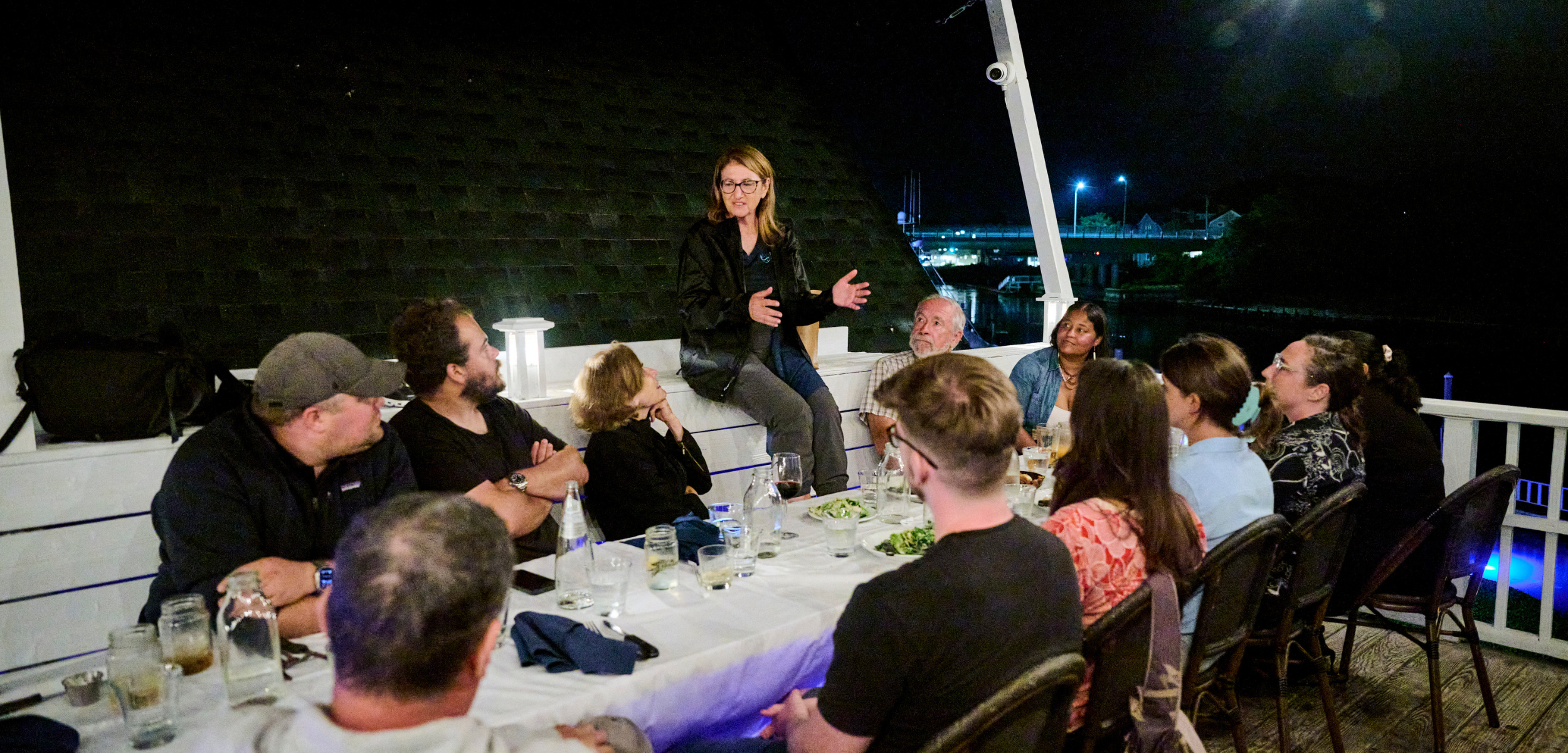
Pictured here (from left to right) is the expedition leadership team: Madeline Bouvier-Brown of Open Ocean Robotics, who led marine operations and vessel training. Christine Santora, who led project management, preparations, logistics, and media events. Dr. Kelsey Leonard, co-Principal Investigator, who provided strategic support and advised on community relations. Conservation icon Dr. Sylvia Earle represented Mission Blue for the expedition launch, underscoring the vessel’s potential to reshape marine research far beyond Long Island. Sunshine Gumbs was the lead indigenous representative for the expedition. Dr. Ellen Pikitch is co-Principal Investigator of the expedition, co-champion of the Hope Spot, and leads eDNA research in the bay for Stony Brook University.
The Leader
Dr. Ellen Pikitch is the Inaugural Endowed Professor of Ocean Conservation Science at Stony Brook University.
An award-winning scientist, conservationist, and communicator, Ellen is transforming the way the ocean is perceived and managed.
Her contributions range from the local to the global levels and have resulted in basic science innovations, fisheries management improvements, and domestic and international policy change.

The Hope
Shinnecock Bay has suffered decades of pollution and algae blooms and lost much of its natural shellfish populations. By improving water clarity and restoring habitats for shellfish, researchers at Stony Brook University co-led by Dr. Pikitch have made remarkable progress in bringing back the bay’s natural balance – and to set an example for coastal communities worldwide.
As Pikitch says:
“If this can work here, it can work in a lot of places around the world.”
Ellen teamed up with The Explorers Club’s former president Ted Janulis to champion Shinnecock Bay as a Hope Spot in early 2022. Since the start, The Explorer’s Club has been a key Hope Spot partner, highlighting Shinnecock Bay at the Club’s annual World Oceans Week, sponsoring the 2023 Inauguration event, and bestowing Flag #132 to Dr. Pikitch and her team for this cutting edge eDNA expedition.
Pictured above is the on-site expedition team, who launched and managed the vessel during eight lengthy deployments over two weeks. Dr. Ellen Pikitch (center) and her team at Stony Brook University include (from left to right) Natalia Benejam, Christine Santora, Madeline Bouvier-Brown, of Open Ocean Robotics, Pikitch, Sunshine Gumbs, Taylor Griffith, a photographer and videographer, Dr. Elizabeth Suter, Elizabeth Salzman, and Dr. Jim Browne, an independent scientist.

With thanks to Dr. Ellen Pikitch, Stony Brook University, The Explorers Club, Elinchrom, Oliphant Studio, Magnus Karlsson, Sequoyah Wildwyn-Dechter and Tushar Khandelwal